
Bartenders Don’t Read Nietzsche
The short order cook dude from
the joint around the block had a rep
as a talker. Didn’t bother me any,
when motivated, I could talk the bark
off a tree, so I expected he was not
much of conversational threat. I must
not have been in the mood for talking
or listening. Must have been March
Madness season or The World Series
as, generally speaking, I could care less
what was on the tube. In fact, I was one
of those guys who wouldn’t mind seeing
every single TV, in every bar on the planet,
in a landfill with all the vital parts removed,
but no one cares what I think on that subject
or among others. I had my brain on Hold
while he went on and on, sipping his bottled
beer, trying to pass off stuff he must have
learned in Modern Philosophy: Nihilism
through Existentialism, as his own thoughts.
When he got to the inevitable, “What doesn’t
kill me, makes me stronger,” it was time
to call a halt to this nonsense,
“That’s Nietzsche.” I said.
“You read Nietzsche?”
“Now and again.”
“In my world bartenders don’t read Nietzsche.”
“Well, in my world, they do. Actually, reading
him was a logical progression from what
I was working on for a paper in grad school
in a course on the later Romantic poets.
I was doing a study on the verse plays of Byron
and I was struck by how his Romantic notion
of the hero was similar to that of Wagner in his
libretti. Everyone who has read them knows they
are excellent verse plays. And not just the
Ring Cycle but the whole of his work
from the Flying Dutchman to Parsifal.
Once you’ve read Wagner, you are led to his
commentators like Bernard Shaw whose
critical discussion of his work pointed out
some of the serious political ramifications
of Wagner’s work in often hilarious ways.
The cover of the Dover edition of The Perfect
Wagnerite, has one of those nifty, demented,
Beardsley drawings of randy folks at the theater.
Perfect. Nietzsche was also an early admirer
of Wagner but eventually realized that if you
extrapolated what he said into actual social situations
you would end up with perfect Nazis. History is
nothing if not cruel. And that’s just how his work
was misused and misunderstood. The ultimate irony
being, the author of Birth of Tragedy, Beyond Good
and Evil, Thus Spake Zarathustra, and Human All
Too Human, would die a raving maniac, brain eaten
away by syphilis. I expect ole Friedrich and Bernie
would have agreed with Twain’s assertion that
German music wasn’t as bad as it sounds.”
He was speechless for a few moments, looking up
at me like I was one of those exhibits from The Mutter
Museum of medical oddities somehow escaped from
my specimen case and put to work here, then quietly
began picking up his change from the bar,
hoisting the beer, he seemed intent on nursing all
afternoon, and polished it off in one go.
“How did you end up here?” He asked.
“Just lucky, I guess.”
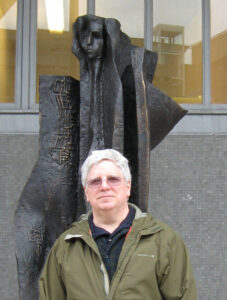
Alan Catlin worked for the better part of 34 years in his unchosen profession as a barman in and around the greater Albany, NY area. He has published dozens of chapbooks and full-length books focusing on his work and the people he met while laboring in the trenches of bar warfare. Alan is the editor at Misfit Magazine.